Traffic riding is not about bravery or reflexes. It is about visibility, positioning, and predicting human behavior before it turns into a problem. Most motorcycle crashes in traffic do not happen because riders lose control. They happen because a driver never saw the rider in the first place. Blind spots play a central role in that failure.
This guide breaks down how blind spots work, why they are especially dangerous for motorcyclists, and how to ride in traffic in a way that keeps you visible, predictable, and harder to ignore.
What Blind Spots Really Are and Why They Exist
Every vehicle on the road has blind spots. Even with mirrors adjusted properly, there are zones around a vehicle that the driver cannot see without physically turning their head. These areas usually sit just behind and to the side of the vehicle, extending across adjacent lanes.
Blind spots exist because mirrors have limits and because human vision prioritizes what it expects to see. Drivers scan for vehicles shaped like cars. Motorcycles do not match that expectation. As a result, a rider can be present, legal, and still invisible.
Understanding where blind spots are located is the first step toward staying out of them.
Why Motorcycles Are Harder for Drivers to Detect
Motorcycles present a unique visibility challenge. They are narrow, often accelerate faster than surrounding traffic, and take up less visual space in mirrors. A quick mirror check that easily detects a car may completely miss a motorcycle.
Depth perception also works against riders. Drivers frequently misjudge how fast a motorcycle is approaching or how close it already is. This leads to lane changes, left turns, and merges that put riders directly in harm’s way.
Because of this, motorcyclists must ride with the assumption that they are not seen, even when eye contact seems possible.
Lane Positioning as a Visibility Strategy
Lane position is one of the most powerful tools a rider has. Each lane can be divided into three basic tracks: left, center, and right. Choosing the correct track affects both visibility and escape options.
The left track often provides the best forward visibility and increases the chance of being seen in mirrors. The right track can be useful when avoiding traffic encroaching from the left or when preparing for a right-side exit. The center track is usually the least desirable due to oil buildup, debris, and reduced visibility.
Smart riders adjust lane position continuously as traffic conditions change. Staying static makes you easier to overlook.
Avoiding the Most Dangerous Blind Spot Positions
The most dangerous place for a motorcycle is riding side by side with a car, especially slightly behind the driver’s door. This is the heart of the blind spot. Lane changes from this position often happen without warning.
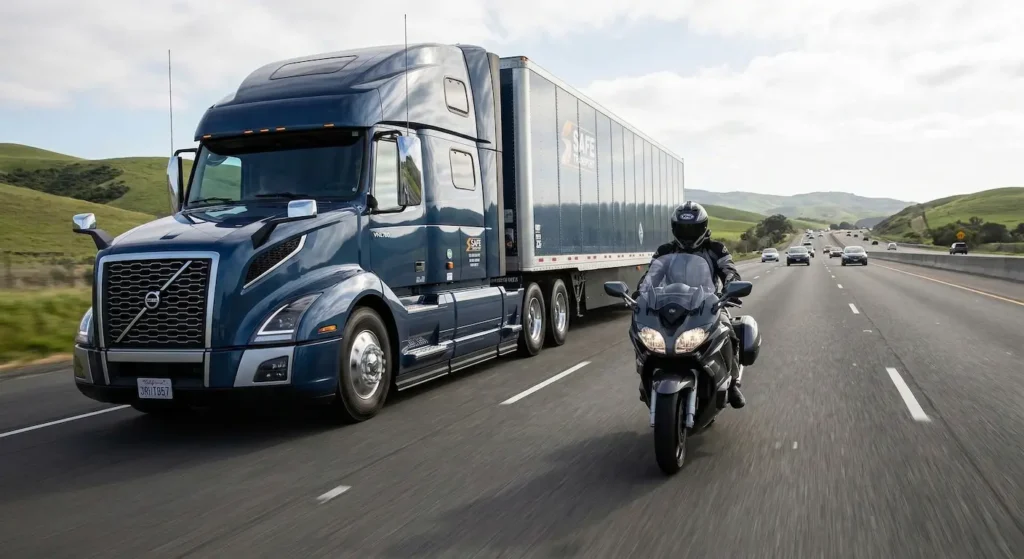
Instead of lingering alongside vehicles, riders should aim to be clearly ahead or clearly behind. Being decisive with speed and spacing reduces ambiguity. Drivers are more likely to recognize a motorcycle that occupies a clear position in their field of view.
If you can see the driver’s face in their mirror, your odds improve. If you cannot, move.
Managing Following Distance in Traffic
The following distance is not just about stopping safely. It is about seeing patterns develop ahead of you. Adequate space allows you to spot braking chains, merging traffic, and erratic drivers before they force sudden reactions.
In heavy traffic, riders often feel pressured to close gaps. This reduces reaction time and increases the chance of being trapped in a blind spot. Increasing the distance slightly can actually improve flow and safety.
When a vehicle follows too closely behind you, avoid speeding up to escape. Adjust your lane position, change lanes when safe, or create space ahead so you can slow gradually.
Using Motion and Contrast to Stay Visible
Visibility is not only about bright gear or headlights. It is about contrast and movement. A motorcycle that blends into its surroundings is easier to miss than one that stands out.
Wearing gear that contrasts with the road and surrounding vehicles helps, especially in low light or overcast conditions. Lane position changes create lateral movement that catches attention in mirrors more effectively than riding straight and steady.
Turn signals should be used early and clearly, but never trusted completely. Signal, then position yourself as if the signal was not noticed.
Riding Smart Around Large Vehicles
Large vehicles change the rules of traffic riding. Trucks, buses, and delivery vans have massive blind spots and limited maneuverability. Their mirrors cover less ground than most drivers realize.
Never linger beside a large vehicle. Pass with purpose and return to a visible position. Give these vehicles extra room to turn and brake. Expect wide turns and delayed reactions.
If you cannot see the driver’s mirrors, assume you are invisible. Space and decisiveness matter more around large vehicles than anywhere else on the road.
Intersection Blind Spots and Inattentional Blindness
Intersections combine multiple risk factors: blind spots, divided attention, and assumptions. Drivers making left turns often look directly at a motorcycle and still pull out. This phenomenon is known as inattentional blindness.
At intersections, reduce speed slightly and apply the brakes. Watch the front wheels instead of faces. Wheels move before the vehicle commits. Position yourself for maximum visibility and an escape route.
Assume that cross traffic does not see you until it proves otherwise.
Riding With a Defensive Mindset in Traffic
Defensive riding focuses on minimizing surprises by recognizing risks early and positioning yourself to avoid last-second decisions. This involves constant scanning of the road, looking beyond the vehicle directly ahead to anticipate problems. Riders who look further have more time to adjust speed, lane position, or spacing. Leaving yourself an exit is crucial, whether it’s an open lane, a shoulder, or extra space ahead. Avoid getting boxed in and adjust your position proactively if traffic tightens.
A defensive rider also separates ego from decision-making. Yielding space or changing position can be the safest choice, even when you’re legally in the right. This mindset makes traffic more manageable and helps riders respond calmly rather than reactively.
Turn Traffic Awareness Into a Skill You Can Rely On
Understanding blind spots is crucial for safe riding, but managing them under pressure requires trained skills. Riding in traffic involves practiced judgment, lane positioning, and anticipating other drivers’ actions. The California Motorcycle Safety Program addresses these real-world scenarios, focusing on traffic strategy, blind spot avoidance, and hazard recognition.
Professional training enhances awareness and cultivates habits that reduce risk, whether you’re a new rider or have years of experience. Additionally, completing an approved course can fulfill licensing requirements and may offer insurance benefits.
Traffic won’t slow down, and mistakes will happen, but knowing how to navigate these challenges confidently and safely is essential. Formal training is one of the best steps to enhance riding safety in real conditions.
FAQs:
How do I know if I am riding in a vehicle’s blind spot?
If you cannot see the driver’s eyes in their mirror, assume you are in their blind spot. This is especially true when riding slightly behind a vehicle in an adjacent lane. Blind spots are larger on trucks and SUVs, so avoid lingering alongside any vehicle for extended periods.
What is the safest lane position when riding in traffic?
There is no single safest lane position in all situations. The safest position is the one that maximizes your visibility and gives you the most space to react. In many cases, the left or right track of the lane improves visibility and reduces exposure to blind spots, while the center track should be avoided when possible due to debris and reduced visibility.
Why do drivers pull out in front of motorcycles even when they look directly at them?
This often happens due to inattentional blindness. Drivers may look directly at a motorcycle but fail to register it as a threat because they are scanning for larger vehicles. This is why riders should slow slightly at intersections, watch front wheels, and never assume they have been seen.