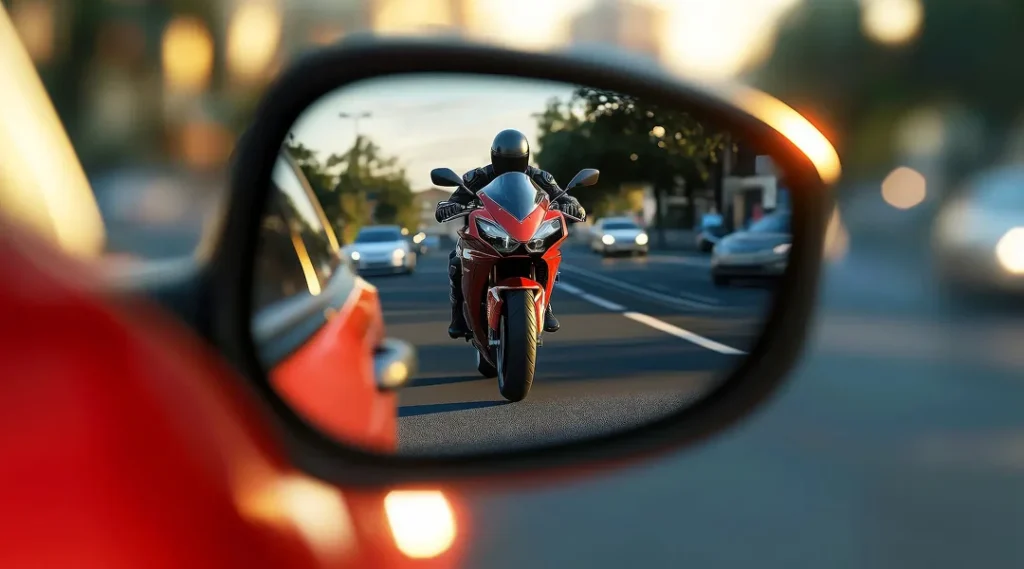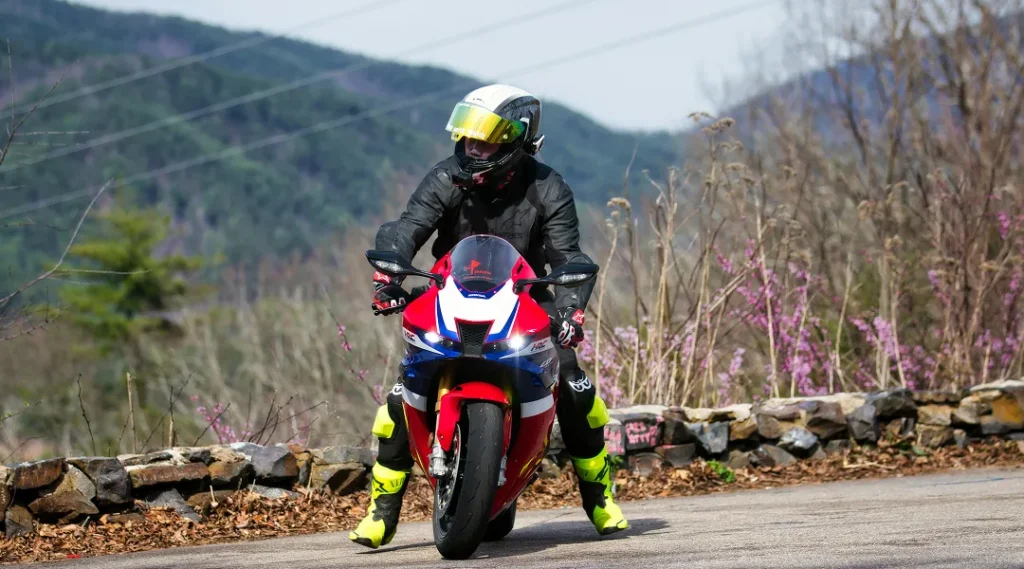
You can ride “careful” and still get surprised. A car turns left when it should not. A truck drops something. A light changes, and the person in front of you decides to slam on the brakes like they are mad at the pavement.
Emergency braking is not about being dramatic. It is about being ready. And yes, this is a learnable skill. Not a personality trait.
1) The real goal is control, not hero numbers
People love to talk about stopping distance like it is a flex. In real life, the win is stopping hard while staying upright, stable, and pointed where you want to go.
That means you are managing traction. Traction is the only “budget” you get. Spend it smoothly and you can brake hard. Spend it in one chaotic grab and the bike collects interest in the form of a skid.
2) Use both brakes, and respect what each one does
Your bike has two brakes for a reason. For normal stops, California’s motorcycle handbook recommends using both at the same time, and it also points out that the front brake provides most of your stopping power. The front brake is safe when used correctly. That last part matters.
Here’s the simple breakdown:
- Front brake: the biggest stopping power. Also, the one people fear because they “heard a story.”
- Rear brake: adds stability, helps shorten stops, but locks easier because weight shifts forward when you slow down.
If you only use the rear, you are choosing the weaker tool and hoping physics feels generous today.
3) Progressive squeeze beats panic grab
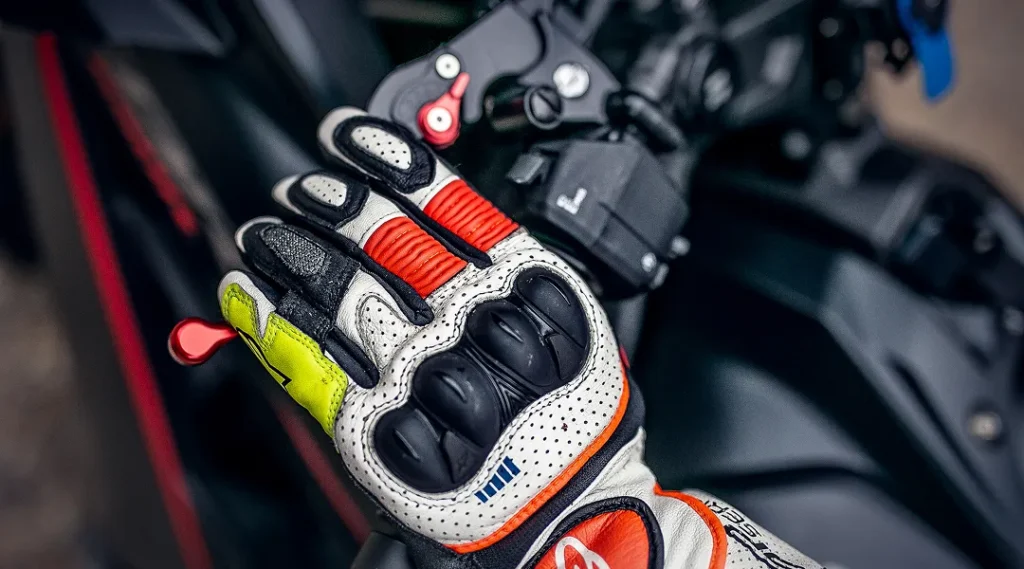
Emergency braking is not “slam everything.” It is fast, firm, and progressive.
Think: squeeze, build, hold.
- Squeeze the front brake smoothly at first, then increase pressure quickly as the front tire loads up.
- Light to lighter, steady rear brake pressure without stomping it.
That loading-up moment is the difference between strong braking and a front tire that says “absolutely not” and slides.
This is why so many riders think the front brake is dangerous. They skip the smooth part, go straight to grab, and then blame the brake for reacting like a tire.
4) Eyes up: your brain steers where you stare
In a surprise stop, your vision wants to drop to the problem. Bumper. Pothole. “That thing.”
Your job is to keep your eyes up so your body stays balanced and your hands stay less twitchy. When riders look down, they tense. When they tense, they get jerky. When they get jerky, traction leaves the chat.
Pick a point ahead. Keep your chin up. Let your arms stay loose enough to brake smoothly.
5) Body position that helps the bike help you
You do not need to do a whole action-movie brace. Just do the basics:
- Squeeze the tank with your knees.
- Keep your wrists neutral so you are squeezing the lever, not pushing yourself forward into it.
- Stay centered over the bike, not collapsing onto the bars.
This keeps weight off your hands, which makes it easier to modulate the front brake. Smooth pressure is the whole game.
6) ABS is helpful, but it is not magic
If your bike has ABS, it can help prevent wheel lock in hard braking. Real-world research has found motorcycle ABS is associated with meaningful reductions in injury crashes in multiple countries.
Two things can be true at once:
- ABS can help you keep control under maximum braking.
- You still need good technique because ABS cannot fix bad decisions like braking mid-turn aggressively on sketchy pavement.
Also, ABS does not mean “grab a handful and pray.” It means you can brake hard with a bigger margin for error, especially when traction is unpredictable.
7) Wet roads, gravel, and paint stripes: adjust your expectations
Traction changes fast. Your braking should change with it.
- Wet pavement: you can still brake hard, but you need a smoother build-up. Sudden inputs are extra spicy in the rain.
- Gravel or sand: reduce lean and be gentle with both brakes. A locked wheel on loose stuff turns into a slide fast.
- Painted lines and metal plates: treat them like low-grip zones, especially when wet.
If the surface looks suspicious, assume it is. This is not paranoia. This is pattern recognition.
8) Practice it like a skill, not a vibe
Emergency braking is perishable. You do not get to practice it for the first time in real traffic and expect greatness.
A simple practice progression:
- Start at a low speed in a clean, open area.
- Do smooth stops with both brakes.
- Increase speed gradually.
- Focus on consistency: smooth squeeze, quick build, straight line, eyes up.
- Track your improvement by feel, not ego.
The point is to make your hands calm under pressure. Calm hands stop faster.
9) Turn braking into confidence with California Motorcycle Safety Program training
Reading tips are helpful. Practicing with feedback from professional instructors is better.
California Motorcycle Safety Program courses help riders build real-world skills like braking, cornering, and hazard response in a structured way, with coaches watching for details you may not catch on your own. If you want emergency braking to feel automatic instead of terrifying, training is the shortcut that actually earns the word “confidence.”
Explore available courses and choose the option that best fits your experience level. Then show up and practice the thing that can save your ride, your bike, and your body when traffic gets unpredictable.
FAQs
1) Should I use the front brake first in an emergency stop?
Use both brakes together, with the front brake providing most of the stopping power. The key is a smooth, progressive squeeze on the front, not a sudden grab.
2) Will using the front brake flip me over the handlebars?
With proper technique, the front brake is safe and is your primary stopping tool. Problems usually come from grabbing abruptly, braking while leaning over, or braking hard on low-traction surfaces.
3) Does ABS mean I can just brake as hard as possible?
ABS can reduce wheel lock during hard braking, but it does not replace good braking habits. Smooth input, eyes up, and straight-line braking still matter.